A boiler thermostat often has just two wires, R and W, with no fan wire and no C wire, and may sit on a zone valve rather than the boiler itself. Choose a thermostat whose maker states boiler or radiant support and can be powered without a C wire (batteries or an adapter), and use its radiant or hydronic setting so it runs longer, gentler cycles.
What's different about boilers
A boiler heats water and pumps it through radiators, baseboard convectors or tubing in the floor. There's no blower, so there's no G wire, and most boilers don't cool, so there's no Y wire. The thermostat closes R to W to call for heat, and the boiler or a zone valve does the rest. EIA's 2020 survey counts 9.29 million U.S. homes whose main heating equipment is a steam or hot water system, against 74.42 million with a central furnace.
Many homes have several zones, each with its own thermostat controlling a zone valve or a circulator pump through a zone control panel. The thermostat then wires to the panel or valve, not the boiler.
The C wire problem
Two-wire boiler circuits rarely have a C wire, and in many zone systems the 24 volts comes from a transformer on the zone valve or panel. That's why battery-powered programmable thermostats are common on boilers. Smart thermostats that need constant power have to get it some other way: an adapter, a spare conductor run to the transformer's common, or a new cable. Our C wire guide covers the options.
Some zone valves and older boiler controls use higher-current or line-voltage circuits. If the thermostat wires are thick or the valve is marked 120 V, that's not a 24-volt circuit; check the valve or panel manual before choosing a thermostat.
Slow systems need different settings
Radiant floors in particular respond slowly: a slab can take hours to warm and keeps releasing heat long after the boiler stops. A thermostat tuned for forced air, cycling on and off several times an hour, overshoots on radiant heat. Many thermostats have a cycle-rate or system-type setting for hot water or radiant heat that lengthens cycles; Google Nest, for example, lists 'True Radiant' among its thermostat features. Use the setting your model offers.
Deep setbacks are less useful on a high-mass radiant floor, because the floor takes so long to recover. Modest setbacks, or none, with early-start recovery work better.
What to look for
- A maker statement that names boilers, hot water, hydronic or radiant heat.
- Heat-only operation without a fan or cooling wire.
- A power option that suits your wiring: batteries, an adapter, or a C wire from the zone transformer.
- A radiant or hot-water cycle setting.
- For electric radiant floors (not hydronic), a line-voltage floor thermostat with a floor sensor, as the floor maker specifies.
A worked example
A three-zone hot-water system has a zone control panel in the basement and a two-wire thermostat in each zone. To put a smart thermostat in the living room zone, you'd check that the model supports boilers, then provide power: many zone panels have a C terminal for each zone, which makes it straightforward if a spare conductor runs up to the thermostat. Without one, a model that runs on batteries, or an adapter approved for zone panels, is the way.
Select 'Boiler, hot water or radiant floor' in the wiring checker and tick R and W to see what fits.
Safety
Thermostats in this explainer
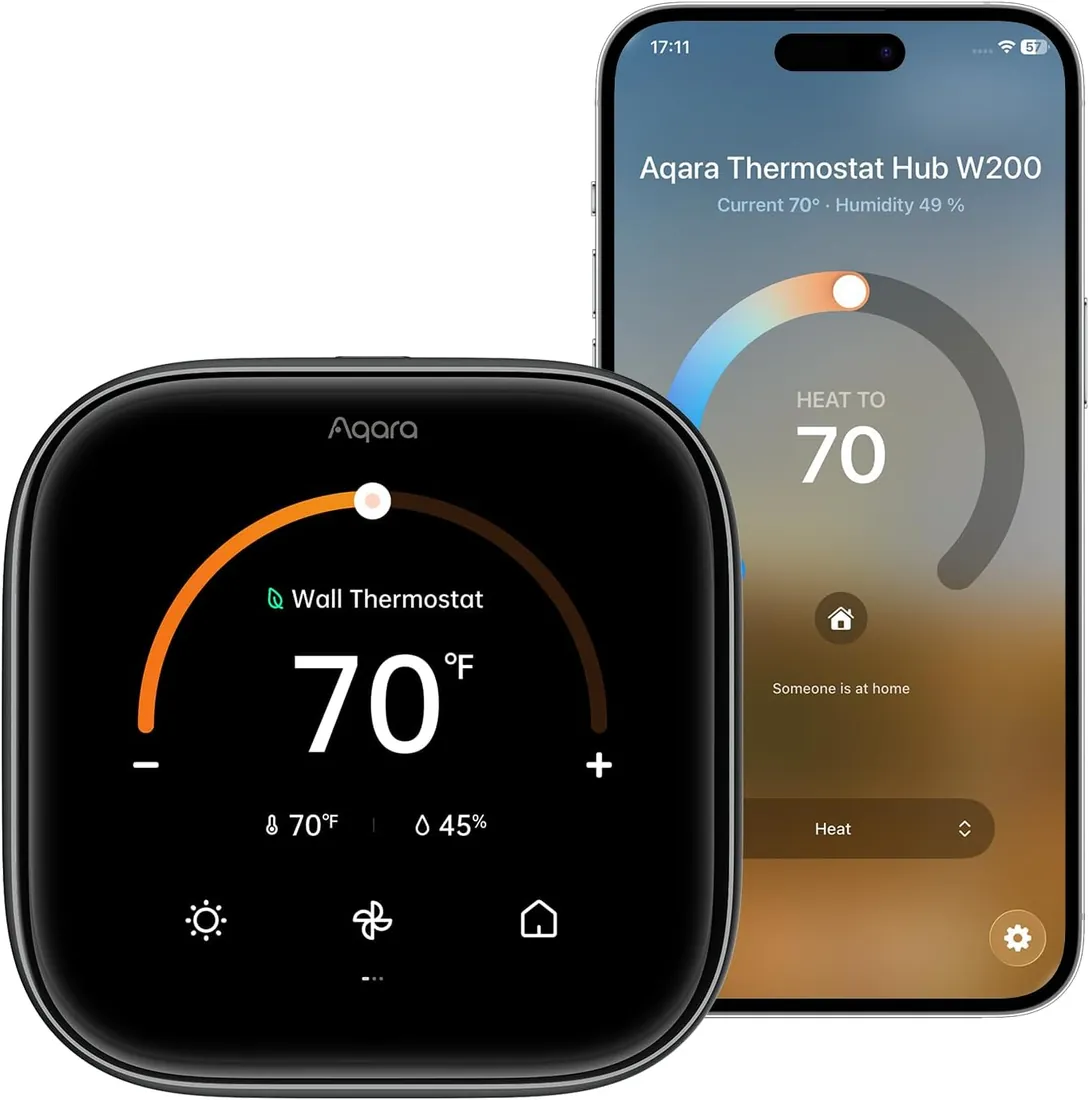
Aqara W200 Smart Thermostat
Heat pump OK
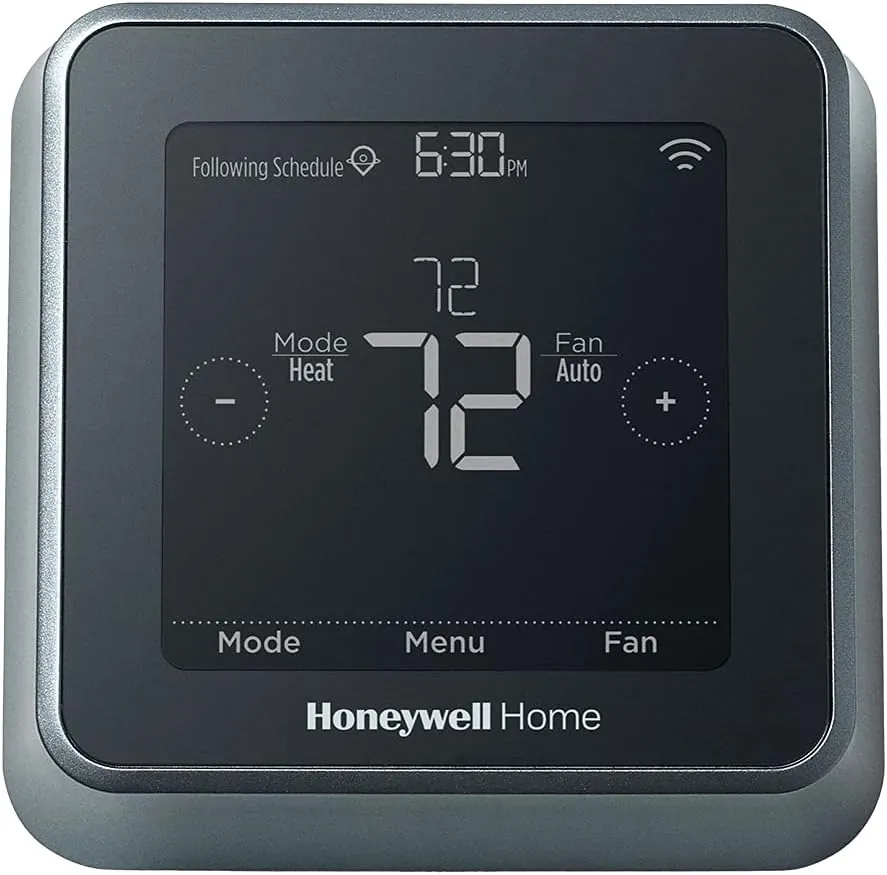
Honeywell Home RCHT8610WF2006/W Smart Thermostat
Needs C wire · Heat pump OK
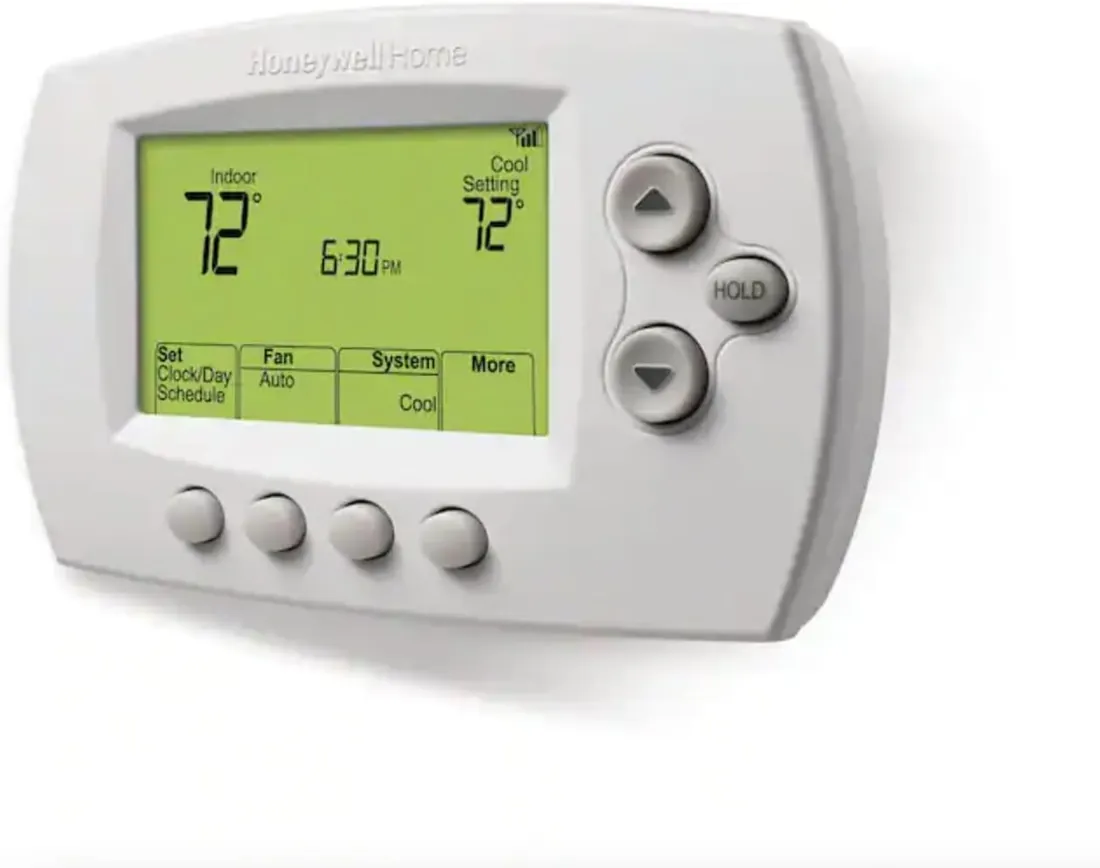
Honeywell Home RTH6580WF Smart Thermostat
Needs C wire · Heat pump OK
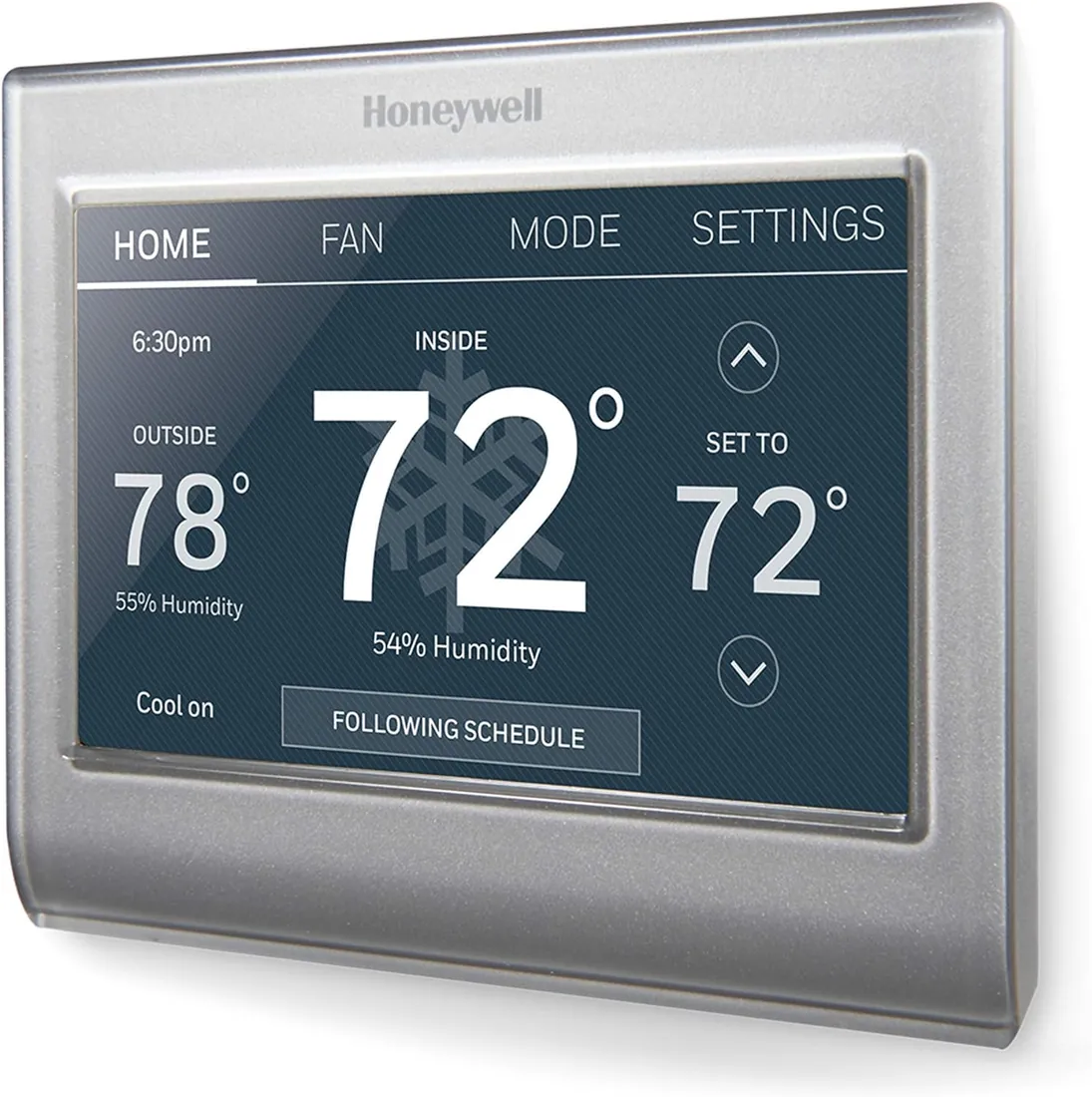
Honeywell Home RTH9585WF1004/W Smart Thermostat
Needs C wire · Heat pump OK