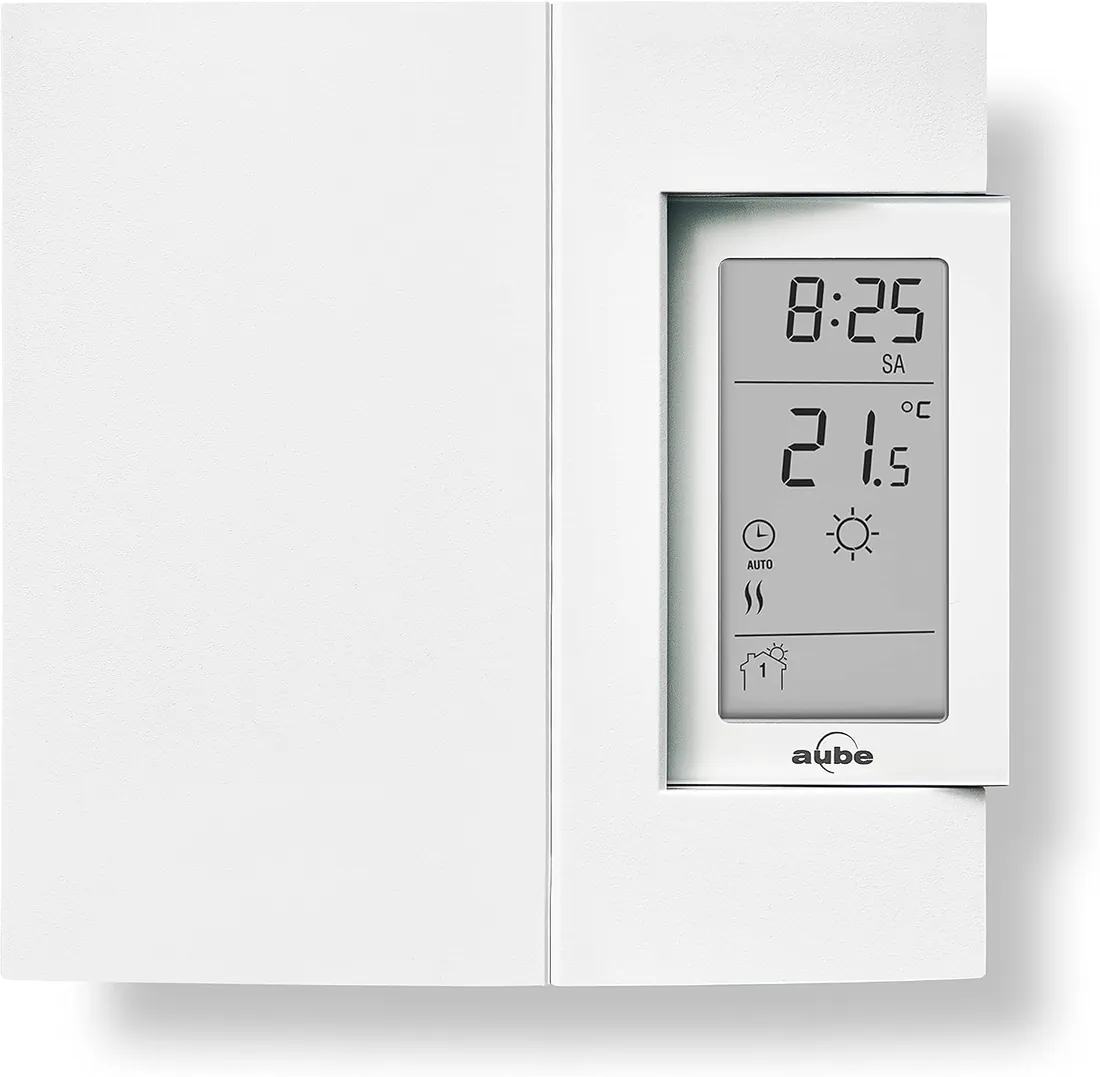
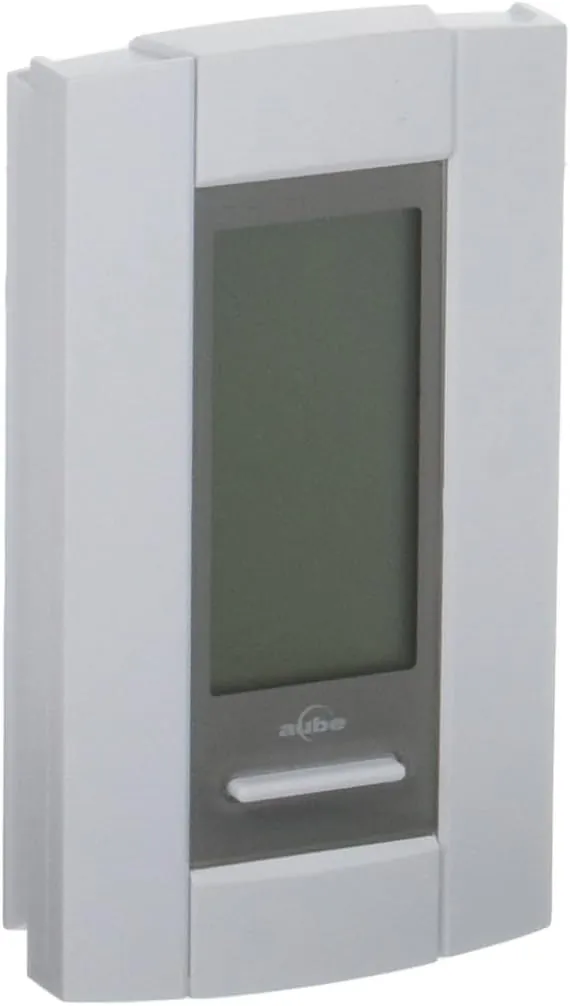
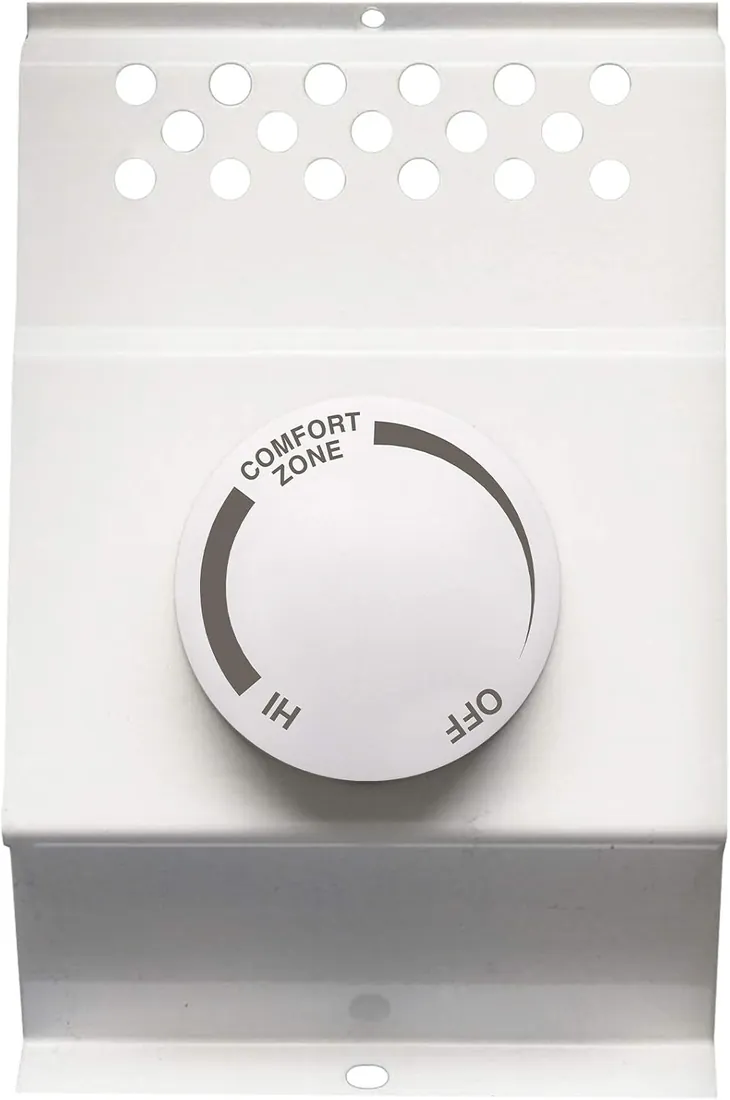
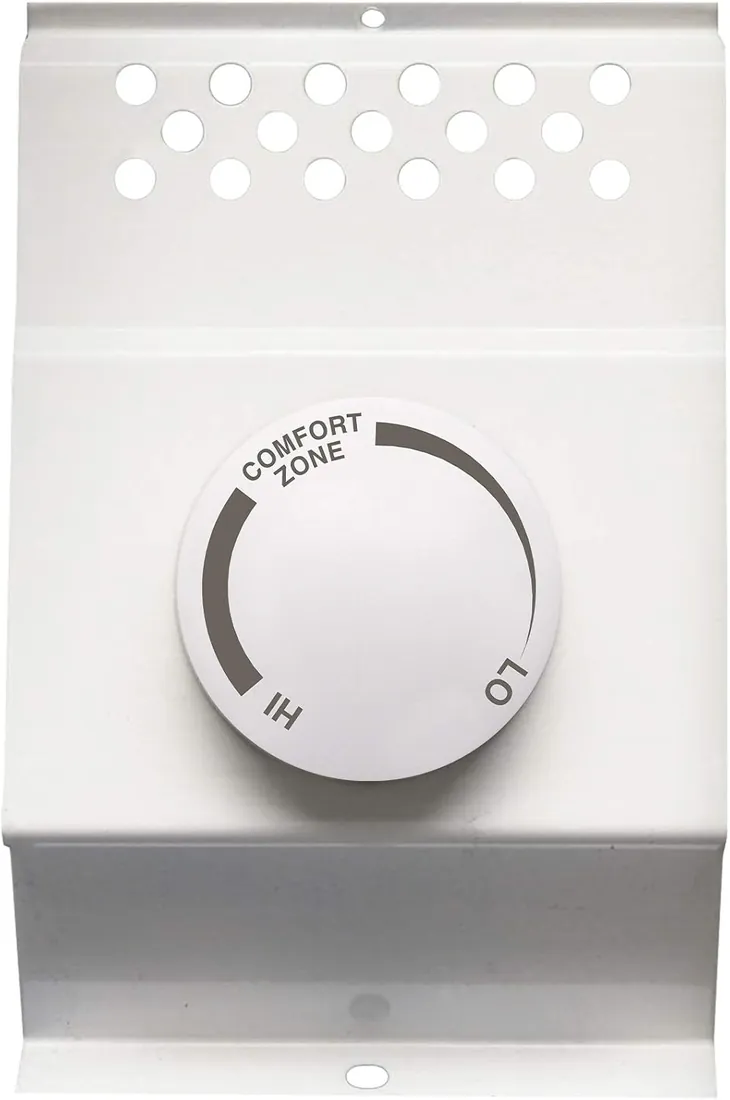
A low-voltage thermostat switches a 24-volt signal to a control board. A line-voltage thermostat switches the heater's full current directly, at 120 or 240 volts. They aren't interchangeable: a 24-volt smart thermostat on a baseboard circuit can be destroyed and is a fire and shock hazard. Match a line-voltage thermostat to your voltage and to the total watts of the heaters it controls.
Two different jobs
Most central systems put a small transformer at the equipment and run thin 24-volt wires to the thermostat. The thermostat only closes signal circuits; the furnace or air handler does the heavy switching. Electric baseboard heaters, wall heaters and many electric floor-heating systems work differently: the thermostat sits in the heater's power circuit and switches the current that makes the heat.
EIA's 2020 Residential Energy Consumption Survey counts 7.65 million homes whose main heat is built-in electric units, the market for line-voltage thermostats, against 16.13 million heated mainly by central heat pumps. Line-voltage homes are fewer, but the stakes of the wrong thermostat are higher.
How to tell which you have
- Thick wires, usually two or four, often joined with wire nuts rather than screw terminals: line voltage. Honeywell Home's guide says thick black or red wires mean a line-voltage system that isn't compatible with low-voltage thermostats.
- A label on the old thermostat with 120 VAC, 240 VAC or L1/L2: line voltage. The ecobee3 lite guide shows these as a stop sign for its 24-volt model.
- Thin wires, usually 18-gauge, on small screws marked R, W, Y, G, C: low voltage.
- A thermostat built into the heater itself: line voltage, switched at the heater.
Matching the load
A line-voltage thermostat has a maximum current or wattage it can switch, stated by the maker. Add up the watts of every heater it will control (each heater's rating label states its watts), then divide by the circuit voltage. A 2,000-watt heater on 240 volts draws about 8.3 amps; two of them, 16.7 amps. The thermostat's rating at 240 volts must be at least that figure.
| Heaters on the thermostat | Total watts | Current at 240 V |
|---|---|---|
| One 1,000 W baseboard | 1,000 W | 4.2 A |
| One 1,500 W baseboard | 1,500 W | 6.3 A |
| Two 1,500 W baseboards | 3,000 W | 12.5 A |
| One 2,000 W and one 1,500 W | 3,500 W | 14.6 A |
The line-voltage load checker does this arithmetic and lists the thermostats whose makers rate them for your load.
Single-pole and double-pole
On a 240-volt circuit both wires are live. A single-pole thermostat breaks one of them, so the heater stops but stays connected to one live leg. A double-pole thermostat breaks both and usually has a true off position. The heater's and thermostat's instructions say which is called for.
| Thermostat | Voltage (maker) | Max load (maker) | Poles (maker) |
|---|---|---|---|
| Aube TH106 Line-Voltage Thermostat | 240 V | 2000 W | Not stated |
| Aube TH115-A-120S Line-Voltage Thermostat | 120 V | Not stated | Not stated |
| Cadet 8734 Line-Voltage Thermostat | 240 V AC | Not stated | single pole |
| Cadet BTF1W Line-Voltage Thermostat | 240 V AC | Not stated | single pole |
Smart options for baseboard heat
You can't put a Nest or an ecobee on a baseboard circuit directly. Line-voltage smart thermostats with Wi-Fi exist and are rated for the load themselves; some systems instead use a relay rated for the heater, controlled by a low-voltage thermostat, as the relay's maker describes. Each room's heater usually has its own thermostat, so a smart setup often means one thermostat per room.
See the line-voltage thermostat table for voltages, loads and poles side by side.
Floor heating
Electric floor-heating mats are line-voltage too, and their thermostats usually add a floor sensor and a ground-fault protection device. The floor system's maker normally specifies which thermostats it supports. Treat that specification as the rule, ahead of any general compatibility claim.