ENERGY STAR labels smart thermostats based on field data from real homes, not a lab test. A qualifying product family must show annual heating run-time reductions of at least 8% and cooling of at least 10% (lower 95% confidence limits of weighted national averages), plus temperature accuracy within 2°F and low standby power. EPA says average savings are about 8% of heating and cooling bills, or $50 a year, and can be higher or lower depending on climate, comfort settings, occupancy and equipment.
Why the label works differently here
For most products, ENERGY STAR sets a lab test and an efficiency threshold. Thermostats don't use energy so much as decide when your furnace and air conditioner use it, so how people set them matters more than the hardware. EPA's 2017 announcement of the first smart thermostat specification framed exactly that problem, citing a utility estimate that 30 to 35% of cooling energy use could be saved by consumers choosing more efficient set points.
So ENERGY STAR's smart thermostat criteria rely on analysis of field data rather than a laboratory test. The recognised partner is the service provider as well as the device, because the service is central to delivering the savings, and EPA software analyses data from randomly selected sample homes for each product family. Certification is by EPA-recognised certification bodies.
The thresholds
| Criterion | Requirement |
|---|---|
| Annual heating run-time reduction | ≥ 8% (lower 95% confidence limit of weighted national average); ≥ 4% at the 20th percentile |
| Annual cooling run-time reduction | ≥ 10% (lower 95% confidence limit); ≥ 5% at the 20th percentile |
| Static temperature accuracy | Within ±2.0°F |
| Network standby power | ≤ 3.0 W average |
| Time to enter network standby | ≤ 5.0 minutes after interaction |
| Heat pump resistance-heat use | Reported by outdoor temperature (0 to 60°F bins) |
The run-time figures compare homes with the product against a baseline. The 20th-percentile figures mean that even the lower-saving homes in the sample have to show some reduction, not just the average.
What the average saving means for you
EPA's FAQ puts average savings at approximately 8% of heating and cooling bills, or $50 per year, and says savings may be greater depending on climate, comfort preferences, occupancy and HVAC equipment. Read that as an average across many homes, not a promise for yours. A household that already sets back the temperature by hand every night will see less; a home that sits at one setting around the clock while empty all day will likely see more.
Worked example: if your heating and cooling cost 1,200 dollars a year, 8% would be 96 dollars. If they cost 600, it would be 48. The thermostat's price, and whether you'd have bought a programmable model anyway, decide the payback. We don't publish payback promises, because the inputs are yours.
How common smart thermostats are
EIA's 2020 Residential Energy Consumption Survey counted 12.78 million U.S. homes with a smart or internet-connected thermostat, 52.59 million with a programmable thermostat and 44.08 million with a non-programmable one. It also found 31.04 million households that adjust the temperature manually. Most homes, in other words, have a thermostat that could do more than it's doing.
Reading the label on a listing
Our product pages show 'ENERGY STAR' when the maker's listing states it, and 'Not stated' otherwise. A listing that says 'ENERGY STAR' means the product family has qualified; the ENERGY STAR product finder lists qualifying models if you want to look one up. Utilities often offer rebates on ENERGY STAR models; ENERGY STAR's rebate finder searches them by zip code.
| Thermostat | ENERGY STAR (maker) | Works with (maker) |
|---|---|---|
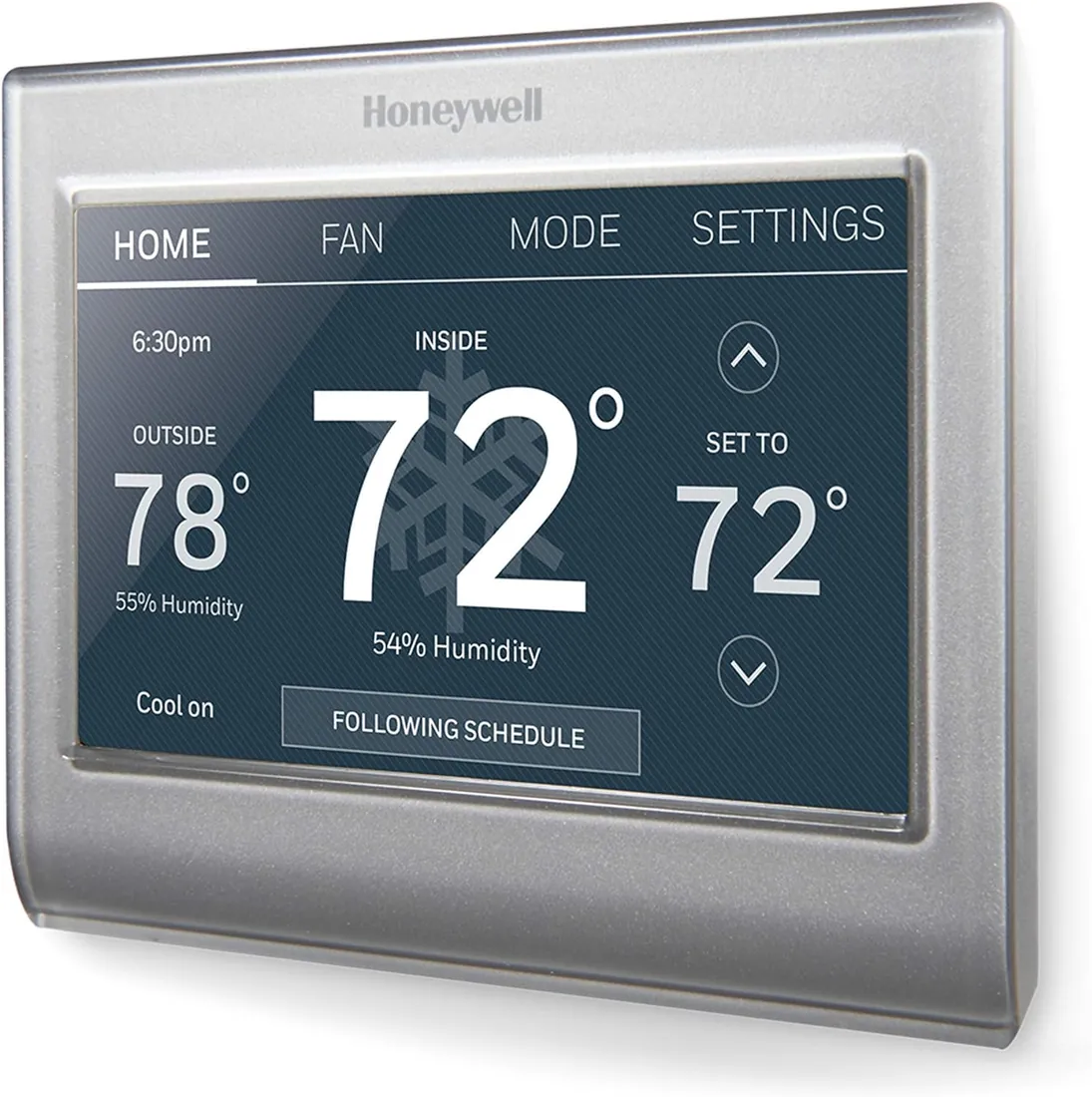
| Honeywell Home RTH9585WF1004/W Smart Thermostat | Energy Star | Touch Screen, Voice |
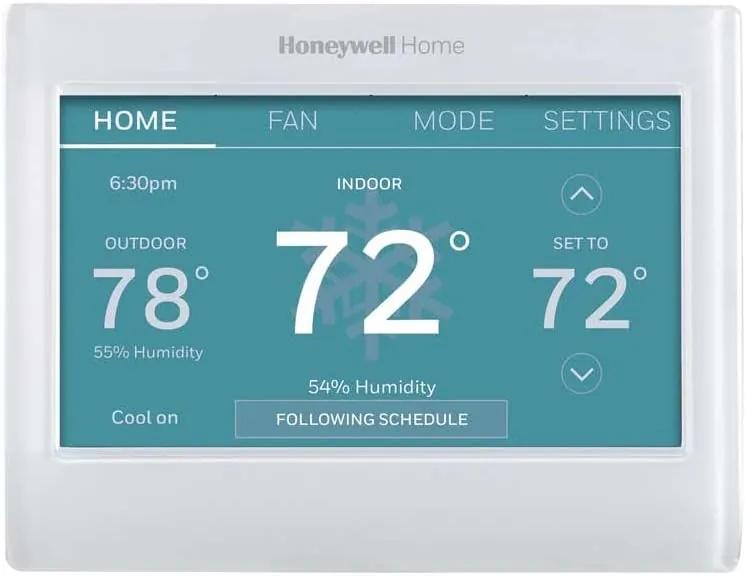
| Honeywell Home RTH9600WF Smart Thermostat | energy star | Amazon Alexa, Android, Google Assistant, IFTTT, iOS |
Getting the saving
- Use the schedule, or the occupancy and geofencing features, rather than holding one temperature.
- Set modest setbacks for sleep and away times; on heat pumps, use the thermostat's auxiliary heat controls so recovery doesn't lean on resistance heat.
- Mount the thermostat away from drafts and sun, and seal the wall hole behind it; the ecobee3 lite guide warns that large holes behind the thermostat affect temperature readings.
- Leave software updates on; ENERGY STAR notes periodic updates keep the energy-saving features current.